


Hey there! As a supplier of Mechanical Dustproof O Rings, I often get asked a pretty interesting question: Can mechanical dustproof O rings be used in vacuum environments? Well, let's dig into this topic and find out.
First off, let's understand what mechanical dustproof O rings are. These little guys are essential sealing components. They're designed to prevent dust, dirt, and other contaminants from getting into a system. They're made from various materials like rubber, silicone, and other elastomers, which give them flexibility and the ability to create a tight seal. You can check out more about our Mechanical O Ring on our website.

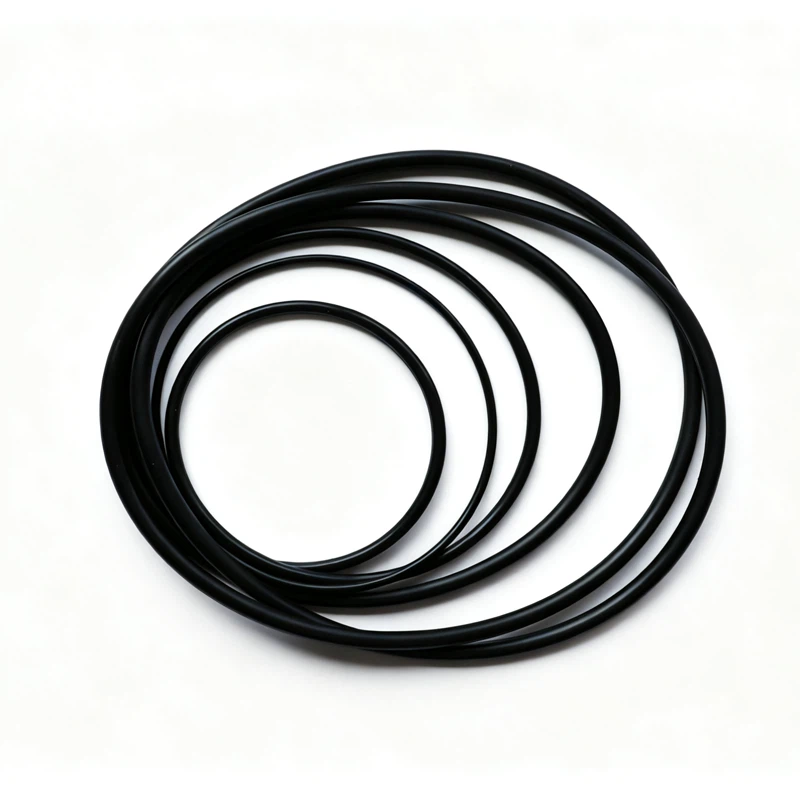
Now, when it comes to vacuum environments, things get a bit more complex. A vacuum is a space where the pressure is significantly lower than the atmospheric pressure. In such an environment, the behavior of materials can change, and the requirements for sealing components are different.
One of the main concerns when using mechanical dustproof O rings in a vacuum is outgassing. Outgassing is the release of gas from a material when it's exposed to a vacuum. This can be a big problem because the released gas can contaminate the vacuum environment, affect the performance of the system, and even damage sensitive equipment. Different materials have different outgassing rates. For example, some types of rubber may outgas more than others. So, when choosing a mechanical dustproof O ring for a vacuum environment, it's crucial to select a material with a low outgassing rate.
Another important factor is the ability of the O ring to maintain its seal under vacuum conditions. In a vacuum, the pressure difference across the O ring can cause it to deform. If the O ring can't withstand this deformation, it may lose its sealing ability, leading to leaks. The material's hardness, elasticity, and compression set are all important properties that affect how well the O ring can maintain its seal in a vacuum.
Let's talk about the advantages of using mechanical dustproof O rings in vacuum environments. Despite the challenges, they do have some benefits. Firstly, they're relatively inexpensive compared to some other types of vacuum seals. This makes them a cost - effective option for many applications. Secondly, they're easy to install and replace. If you have a system that needs regular maintenance or component replacement, mechanical dustproof O rings can be a practical choice.
However, there are also some limitations. As mentioned earlier, outgassing can be a major issue. Also, they may not be suitable for extremely high - vacuum applications where the requirements for cleanliness and sealing performance are very strict. In such cases, you might need to consider other types of seals, like metal seals or special high - performance elastomer seals.
Now, let's look at some real - world applications. In the semiconductor industry, vacuum chambers are used for processes like wafer fabrication. Mechanical dustproof O rings can be used in these chambers to seal doors, ports, and other openings. But they need to be carefully selected to ensure they meet the strict cleanliness and sealing requirements of the semiconductor manufacturing process.
In the aerospace industry, vacuum systems are used in various applications, such as satellite instrumentation and space exploration equipment. Here, the reliability of the seals is crucial. Mechanical dustproof O rings can be used in some less - critical parts of these systems, but for the most sensitive components, more advanced sealing solutions may be required.
When it comes to choosing the right mechanical dustproof O ring for a vacuum environment, here are some tips. First, consult with the O ring manufacturer or supplier. They have the expertise and experience to recommend the most suitable material and design based on your specific vacuum requirements. Second, conduct some tests. You can perform outgassing tests and seal integrity tests on sample O rings to ensure they meet your standards.
If you're in the market for mechanical dustproof O rings for your vacuum applications, we're here to help. We offer a wide range of O rings made from different materials, each with its own properties and suitability for different vacuum conditions. We also have Mechanical Insulating Rubber Strip and Oil Resistant Mechanical Gasket that might be useful for your overall sealing needs.
Whether you're working on a small - scale laboratory vacuum system or a large - scale industrial vacuum application, we can provide you with the right sealing solutions. Our team of experts can assist you in choosing the best products and answer any questions you may have. So, if you're interested in learning more or making a purchase, don't hesitate to get in touch. We're looking forward to discussing your requirements and helping you find the perfect mechanical dustproof O rings for your vacuum environment.
References
- "Sealing Technology Handbook" by John A. Smith
- "Vacuum Technology: Principles and Applications" by David C. Brown


