


What is the hardness of a typical mechanical O - ring?
As a mechanical O - ring supplier, I've encountered numerous inquiries about the hardness of these essential sealing components. The hardness of a mechanical O - ring is a critical factor that significantly impacts its performance, durability, and suitability for various applications. In this blog, I'll delve into the concept of O - ring hardness, its measurement, and how it relates to different industrial needs.
Understanding O - ring Hardness
O - ring hardness refers to the material's resistance to indentation. This property is crucial because it determines how well the O - ring can seal effectively under pressure and in different environments. The most commonly used scale to measure O - ring hardness is the Shore durometer scale. There are different types of Shore scales, but for rubber O - rings, the Shore A scale is predominantly used.
The Shore A scale ranges from 0 to 100. A lower Shore A value indicates a softer rubber, while a higher value represents a harder rubber. For example, a very soft O - ring might have a Shore A hardness of around 30, which would feel quite pliable and squishy. On the other hand, a very hard O - ring could have a Shore A hardness of 90 or more, making it rigid and less flexible.
Soft O - rings (Shore A 30 - 50)
Soft O - rings are ideal for applications where a tight seal is required on irregular or rough surfaces. Their flexibility allows them to conform easily to the mating surfaces, filling in gaps and preventing leakage. For instance, in some medical devices where a gentle seal is needed to protect sensitive components, soft O - rings are a popular choice. They can also be used in applications with low - pressure systems, as they can deform under relatively small forces to create a seal. However, soft O - rings are more prone to wear and extrusion, especially in high - pressure environments.
Medium - hardness O - rings (Shore A 50 - 70)
Medium - hardness O - rings are the most commonly used in a wide range of industrial applications. They offer a good balance between flexibility and resistance to wear and extrusion. In hydraulic systems, for example, medium - hardness O - rings can withstand moderate pressures while still maintaining a reliable seal. They are also suitable for applications where the mating surfaces are relatively smooth and the operating conditions are not overly extreme. Their versatility makes them a go - to choice for many engineers and technicians.
Hard O - rings (Shore A 70 - 90)
Hard O - rings are designed for applications that require high resistance to extrusion and wear. In high - pressure hydraulic systems or in environments with significant physical stress, hard O - rings can perform better than their softer counterparts. They are less likely to deform or be forced out of their grooves under extreme pressure. However, hard O - rings may not be able to seal as well on rough or irregular surfaces due to their lack of flexibility.
Factors Influencing O - ring Hardness Selection
When selecting the appropriate hardness for a mechanical O - ring, several factors need to be considered:
- Pressure: Higher pressures generally require harder O - rings to prevent extrusion. For example, in a high - pressure industrial compressor, a Shore A 80 or 90 O - ring might be necessary.
- Temperature: Extreme temperatures can affect the hardness and performance of O - rings. Some rubber compounds may become harder in cold temperatures and softer in hot temperatures. Therefore, the expected temperature range of the application must be taken into account.
- Fluid Compatibility: The type of fluid that the O - ring will be in contact with is also crucial. Some fluids can swell or degrade certain rubber compounds, altering their hardness and performance. For example, if the O - ring is exposed to oil, an Oil Resistant Mechanical Gasket made from a suitable oil - resistant rubber with the appropriate hardness should be selected.
- Surface Finish: The smoothness or roughness of the mating surfaces impacts the choice of O - ring hardness. As mentioned earlier, soft O - rings are better for rough surfaces, while hard O - rings are more suitable for smooth surfaces.
Our Product Offerings
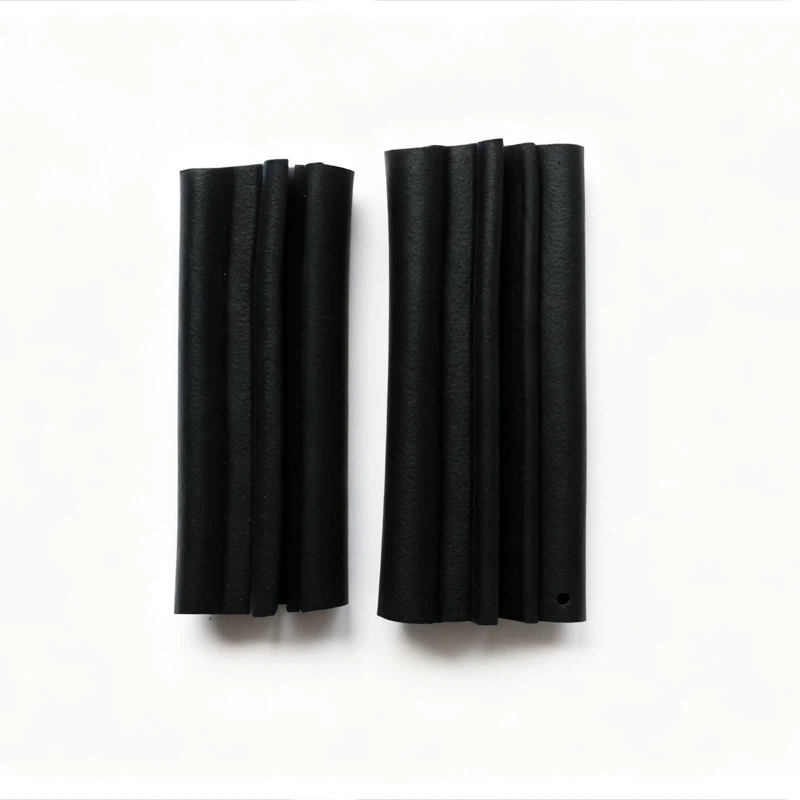
At our company, we offer a wide range of mechanical O - rings with different hardness levels to meet various industrial needs. Whether you need a soft O - ring for a delicate application or a hard one for a high - stress environment, we can provide the right solution. In addition to O - rings, we also supply other related products such as Mechanical Insulating Rubber Strip and Mechanical Waterproof Rubber Strip, which are essential for different sealing and insulation requirements.
Our O - rings are made from high - quality rubber compounds that are carefully selected and tested to ensure optimal performance. We use advanced manufacturing processes to maintain consistent hardness and other properties across all our products. Our quality control team conducts strict inspections at every stage of production to guarantee that our O - rings meet or exceed industry standards.

Why Choose Our O - rings?
- Quality Assurance: Our products are manufactured to the highest standards, ensuring long - term reliability and performance.
- Customization: We understand that different applications have unique requirements. That's why we offer custom - made O - rings with specific hardness levels, sizes, and materials.
- Expert Support: Our team of experts is always available to provide technical advice and support. Whether you're unsure about the right hardness for your application or need help with installation, we're here to assist you.
Contact Us for Procurement
If you're in the market for high - quality mechanical O - rings or other sealing products, we invite you to get in touch with us. Our sales team is ready to discuss your specific requirements and provide you with a competitive quote. We believe that our products and services can be a valuable addition to your projects, and we look forward to the opportunity to work with you.
References
- ASTM D2240 - Standard Test Method for Rubber Property - Durometer Hardness
- Rubber Handbook: The Definitive Guide to Rubber Technology and Compounding


