


Gas permeability is a crucial property when it comes to mechanical insulating rubber strips. As a supplier of these essential components, I've witnessed firsthand the significance of understanding this characteristic in various industrial applications. In this blog, we'll delve into what gas permeability is, why it matters for mechanical insulating rubber strips, and how it impacts the performance of these products.
What is Gas Permeability?
Gas permeability refers to the ability of a material to allow gases to pass through it. It is a measure of how easily gas molecules can diffuse across a material's structure. In the context of mechanical insulating rubber strips, gas permeability determines how well the rubber can prevent the passage of gases, such as air, oxygen, nitrogen, or other industrial gases.
The gas permeability of a material is typically quantified by its permeability coefficient. This coefficient is a measure of the rate at which a gas can permeate through a material under specific conditions of temperature, pressure, and thickness. The SI unit for gas permeability is the Barrers, which is defined as the volume of gas (in cm³) that passes through a material of a given area (in cm²) and thickness (in cm) per unit time (in seconds) under a pressure difference (in cmHg).
Factors Affecting Gas Permeability of Mechanical Insulating Rubber Strips
Several factors influence the gas permeability of mechanical insulating rubber strips. Understanding these factors is essential for selecting the right rubber material for a particular application.
Rubber Composition
The type of rubber used in the strip plays a significant role in determining its gas permeability. Different rubber polymers have different molecular structures, which affect the ease with which gas molecules can diffuse through them. For example, natural rubber has relatively high gas permeability compared to synthetic rubbers like butyl rubber. Butyl rubber has a dense molecular structure that restricts the movement of gas molecules, making it an excellent choice for applications where low gas permeability is required, such as in sealing applications for gas storage tanks.
Temperature
Temperature has a profound effect on gas permeability. As the temperature increases, the kinetic energy of gas molecules also increases, causing them to move more rapidly. This increased molecular motion leads to higher gas permeability. Conversely, at lower temperatures, gas molecules have less energy and move more slowly, resulting in lower gas permeability. Therefore, when selecting a mechanical insulating rubber strip for an application, it's important to consider the operating temperature range and choose a rubber material that can maintain low gas permeability within that range.
Pressure
The pressure difference across the rubber strip also affects gas permeability. A higher pressure difference creates a greater driving force for gas molecules to move through the material, resulting in increased gas permeability. In applications where there is a significant pressure differential, such as in high-pressure gas systems, it's crucial to select a rubber strip with low gas permeability to prevent gas leakage.
Rubber Thickness
The thickness of the rubber strip is another important factor. Generally, thicker rubber strips have lower gas permeability compared to thinner ones. This is because gas molecules have to travel a longer distance through the material, which increases the resistance to gas diffusion. However, increasing the thickness of the rubber strip also has practical limitations, such as increased cost and reduced flexibility. Therefore, a balance needs to be struck between thickness and other performance requirements.

Importance of Gas Permeability in Mechanical Insulating Rubber Strips
The gas permeability of mechanical insulating rubber strips is of utmost importance in many industrial applications. Here are some key reasons why:
Sealing Applications
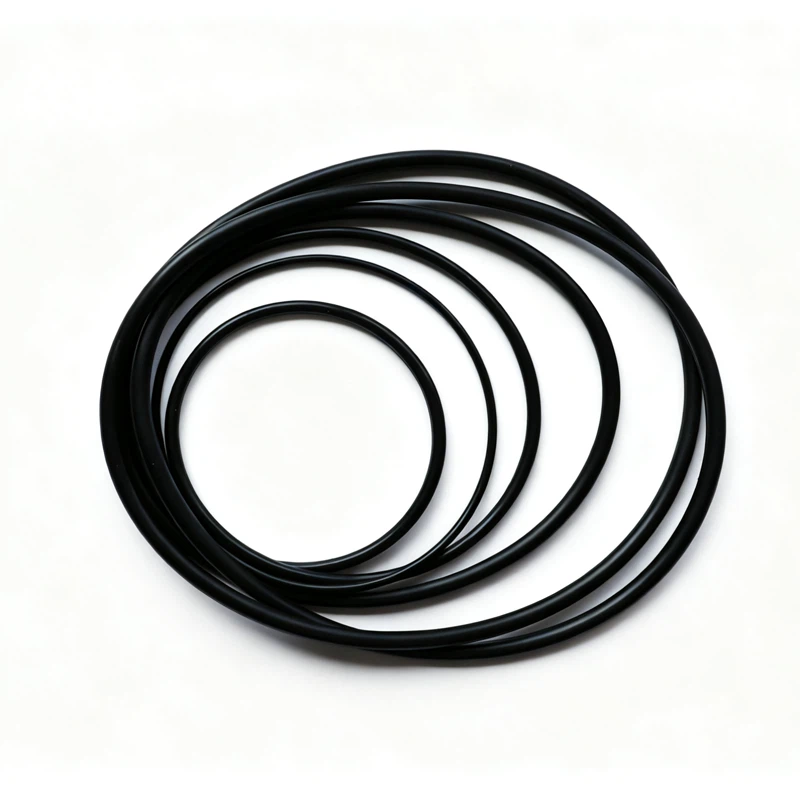
In sealing applications, such as in Mechanical O Ring and Mechanical Waterproof Rubber Strip, low gas permeability is essential to prevent gas leakage. For example, in automotive engines, rubber seals are used to prevent the leakage of combustion gases, which can lead to reduced engine efficiency and increased emissions. Similarly, in the aerospace industry, rubber seals are used to maintain the integrity of pressurized cabins and fuel systems, where even a small amount of gas leakage can have serious consequences.
Insulation Applications
In insulation applications, mechanical insulating rubber strips are used to prevent the transfer of heat and gases. Low gas permeability helps to maintain the insulating properties of the rubber strip by reducing the convection and conduction of heat through the gas phase. This is particularly important in applications where energy efficiency is a priority, such as in building insulation and refrigeration systems.
Chemical Resistance
In some applications, mechanical insulating rubber strips are exposed to various chemicals and gases. Low gas permeability can help to prevent the ingress of these chemicals into the rubber material, which can cause degradation and reduce the lifespan of the strip. For example, in the chemical processing industry, rubber gaskets and seals are used to prevent the leakage of corrosive gases and liquids. A rubber strip with low gas permeability can provide better protection against chemical attack and ensure the long-term performance of the sealing system.
Testing Gas Permeability of Mechanical Insulating Rubber Strips
To ensure the quality and performance of mechanical insulating rubber strips, it's important to test their gas permeability. There are several methods available for testing gas permeability, including the following:
Pressure Decay Method
In the pressure decay method, a sample of the rubber strip is placed in a test chamber, and the chamber is pressurized with a specific gas. The pressure in the chamber is then monitored over time. As the gas permeates through the rubber strip, the pressure in the chamber decreases. The rate of pressure decay is used to calculate the gas permeability of the rubber strip.
Gas Flow Method
The gas flow method involves measuring the flow rate of a gas through a rubber strip under a constant pressure difference. A known volume of gas is passed through the strip, and the time taken for the gas to pass through is measured. The gas permeability is then calculated based on the flow rate and the dimensions of the rubber strip.
Gravimetric Method
The gravimetric method measures the change in weight of a rubber strip due to the absorption and desorption of gas. A sample of the rubber strip is weighed before and after exposure to a specific gas under controlled conditions. The change in weight is used to calculate the amount of gas absorbed or desorbed by the rubber strip, which can be used to determine its gas permeability.
Selecting the Right Mechanical Insulating Rubber Strip Based on Gas Permeability
When selecting a mechanical insulating rubber strip for a particular application, it's important to consider the gas permeability requirements. Here are some guidelines to help you make the right choice:
Identify the Gas
First, identify the type of gas that the rubber strip will be exposed to. Different gases have different molecular sizes and properties, which can affect their permeability through the rubber material. For example, small gas molecules like hydrogen and helium have higher permeability compared to larger molecules like carbon dioxide.
Determine the Operating Conditions
Next, determine the operating conditions, including temperature, pressure, and humidity. These factors can significantly affect the gas permeability of the rubber strip. Choose a rubber material that can maintain low gas permeability within the expected operating conditions.
Consider Other Performance Requirements
In addition to gas permeability, consider other performance requirements, such as mechanical strength, flexibility, chemical resistance, and durability. A rubber strip that meets all the performance requirements of the application is essential for ensuring long-term reliability and performance.
Conclusion
Gas permeability is a critical property of mechanical insulating rubber strips that affects their performance in various industrial applications. As a supplier of these products, we understand the importance of providing high-quality rubber strips with low gas permeability. By considering the factors that affect gas permeability, testing the gas permeability of our products, and helping our customers select the right rubber strip for their applications, we can ensure the long-term performance and reliability of their sealing and insulation systems.
If you're in the market for mechanical insulating rubber strips and have specific gas permeability requirements, we'd love to hear from you. Our team of experts can help you select the right product for your application and provide you with the technical support you need. Contact us today to start the procurement and negotiation process.
References
- "Rubber Technology: Compounding, Mixing, and Testing" by Werner Hofmann
- "Handbook of Elastomers" edited by Abraham I. Isayev
- "Gas Permeation Through Polymers and Membranes" by Samir A. Hashim


