


As a supplier of Mechanical O Rings, I've had the privilege of working closely with these essential components in various industries. While Mechanical O Rings are widely used for their sealing capabilities, it's important to shed light on their disadvantages. Understanding these drawbacks can help customers make informed decisions and take appropriate measures to mitigate potential issues.
Limited Temperature Resistance
One of the significant disadvantages of Mechanical O Rings is their limited temperature resistance. Different materials used in O Rings have specific temperature ranges within which they can function effectively. For instance, natural rubber O Rings typically have a relatively low temperature tolerance, usually between -20°C to 80°C. Beyond this range, the rubber can harden or become too soft, losing its sealing properties.
In high - temperature environments, the O Ring may degrade due to thermal oxidation. This degradation can lead to cracking, which allows fluids or gases to leak through the seal. On the other hand, in extremely cold conditions, the O Ring may lose its elasticity, becoming brittle and prone to breakage. This lack of temperature flexibility can be a major limitation in industries such as aerospace and automotive, where components are often exposed to a wide range of temperatures.
If you're looking for an O Ring that can withstand high - temperature applications, you might consider an Oil Resistant Mechanical Gasket. These gaskets are designed to resist the effects of heat and oil, providing a more reliable seal in harsh environments.
Chemical Compatibility Issues
Mechanical O Rings are also susceptible to chemical compatibility issues. Different O Ring materials react differently to various chemicals. For example, nitrile rubber O Rings are generally resistant to oils and fuels, but they may not be suitable for use with strong acids or solvents. When an O Ring comes into contact with a chemical that it is not compatible with, it can swell, shrink, or dissolve.
Swelling can cause the O Ring to become oversized, leading to installation problems and potential damage to the sealing surface. Shrinkage, on the other hand, can result in a loose fit, causing leaks. Dissolution is the most severe form of chemical damage, as it completely destroys the O Ring's structure and renders it useless.
In industries such as chemical processing and pharmaceuticals, where exposure to a wide variety of chemicals is common, choosing the right O Ring material is crucial. It's often necessary to conduct chemical compatibility tests before selecting an O Ring for a specific application. Our Mechanical O Ring product line offers a range of materials to suit different chemical environments.
Wear and Tear
Over time, Mechanical O Rings are subject to wear and tear. Friction between the O Ring and the sealing surface can cause abrasion, leading to a reduction in the O Ring's thickness and diameter. This wear can be accelerated by factors such as high - pressure applications, high - speed movement, and the presence of abrasive particles in the fluid or gas being sealed.
In dynamic sealing applications, where the O Ring is in constant motion, wear is even more of a concern. For example, in hydraulic cylinders, the O Ring is subjected to repeated compression and expansion as the piston moves. This cyclic loading can cause fatigue in the O Ring material, leading to cracking and eventual failure.

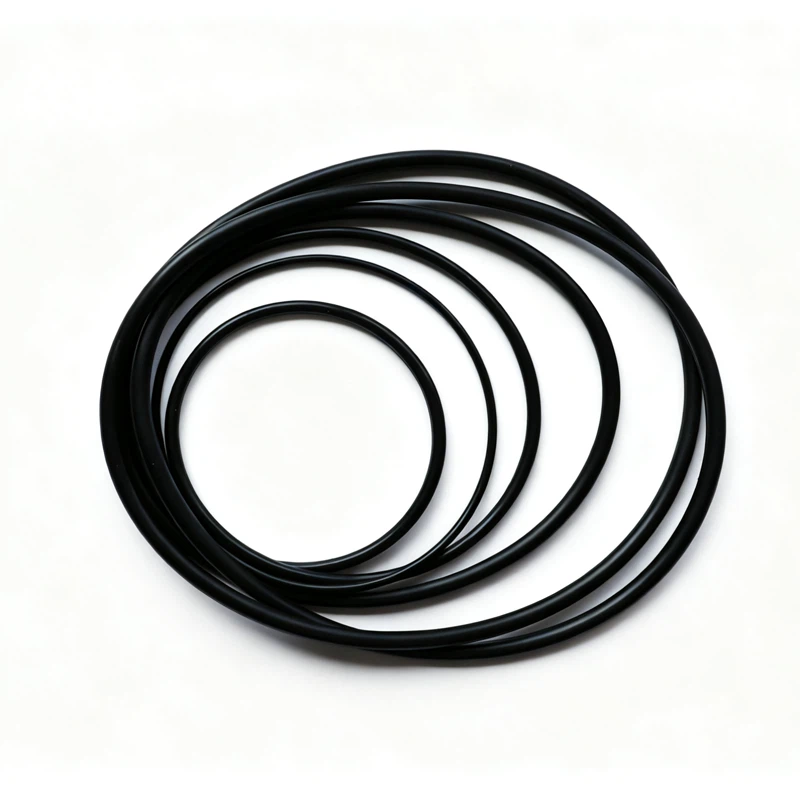
To reduce wear and tear, it's important to ensure proper lubrication of the O Ring and the sealing surface. Additionally, choosing an O Ring material with high abrasion resistance can help extend its service life. Our Mechanical Waterproof Rubber Strip is designed to provide excellent wear resistance, making it suitable for demanding applications.
Installation Difficulties
Installing Mechanical O Rings can be a challenging task, especially in tight or complex spaces. O Rings need to be installed correctly to ensure a proper seal. Incorrect installation can lead to issues such as twisting, pinching, or cutting of the O Ring.
Twisting of the O Ring during installation can cause uneven stress distribution, which can lead to premature failure. Pinching can occur when the O Ring is compressed too tightly between two surfaces, causing damage to the O Ring material. Cutting can happen if the O Ring comes into contact with sharp edges during installation.
To avoid these installation problems, it's important to follow the manufacturer's installation guidelines carefully. Special installation tools may be required in some cases to ensure a proper fit. Our technical support team is available to provide guidance on the correct installation of our Mechanical O Rings.
Cost Considerations
Another disadvantage of Mechanical O Rings is the cost. High - performance O Ring materials, such as fluorocarbon rubber (Viton), can be quite expensive. These materials are often used in applications where high temperature, chemical resistance, and durability are required.
In addition to the cost of the O Ring itself, there are also other associated costs, such as the cost of installation, maintenance, and replacement. Frequent replacement of O Rings due to wear and tear or chemical damage can add up over time, increasing the overall cost of the system.
However, it's important to note that while high - performance O Rings may be more expensive upfront, they can provide long - term cost savings by reducing the frequency of maintenance and replacement. When choosing an O Ring, it's important to consider the total cost of ownership rather than just the initial purchase price.
Conclusion
While Mechanical O Rings are widely used and offer many benefits, they also have several disadvantages. Limited temperature resistance, chemical compatibility issues, wear and tear, installation difficulties, and cost considerations are all factors that need to be taken into account when selecting an O Ring for a specific application.
As a supplier of Mechanical O Rings, we understand the importance of providing our customers with high - quality products and reliable technical support. We offer a wide range of O Ring materials and sizes to meet the diverse needs of our customers. If you're facing challenges with your current O Ring application or need help selecting the right O Ring for your project, we encourage you to contact us for a consultation. Our team of experts is ready to assist you in finding the best sealing solution for your needs.
References
- "Sealing Technology Handbook" by John H. Bickford
- "Rubber Seals and Gaskets: Design, Application, and Testing" by David A. Thomas
- Industry standards and technical documents related to O Ring manufacturing and application.


