


Mechanical O-rings are fundamental components in a wide range of industries, playing a crucial role in preventing fluid and gas leakage. As a dedicated supplier of Mechanical O Ring, I have witnessed firsthand the significance of these small yet powerful devices. In this blog, I will delve into the science behind how mechanical O-rings prevent leakage, exploring their design, materials, and applications.
The Basics of Mechanical O-Rings
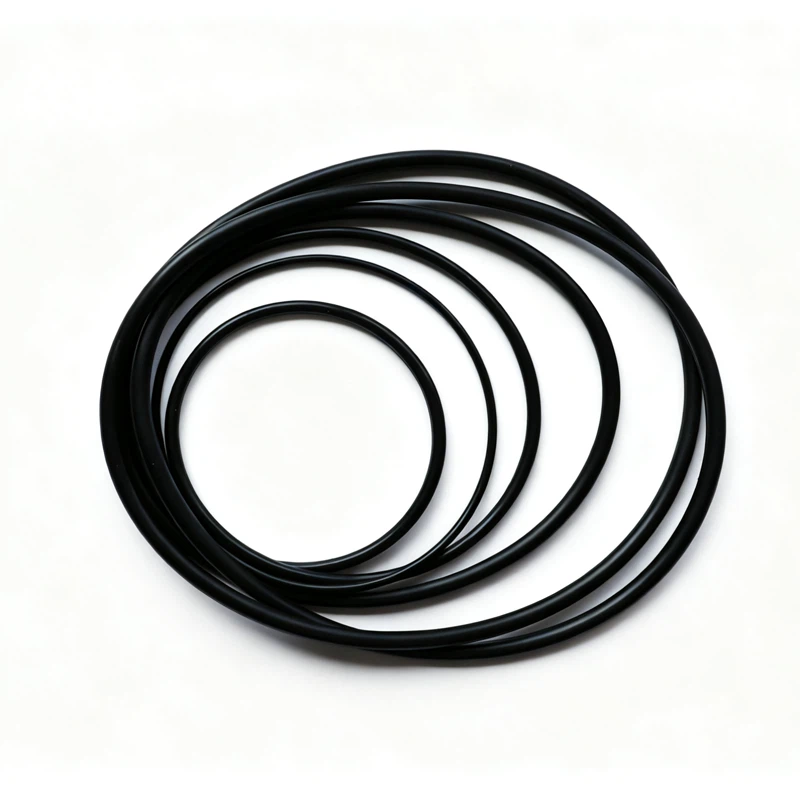
Mechanical O-rings are circular seals typically made from elastomeric materials such as rubber, silicone, or fluorocarbon. Their simple yet effective design consists of a continuous loop with a circular cross-section, which allows them to fit snugly into grooves or mating surfaces. When compressed between two components, the O-ring deforms and fills the gaps, creating a tight seal that prevents the passage of fluids or gases.
How O-Rings Create a Seal
The sealing mechanism of mechanical O-rings is based on the principle of elastic deformation. When an O-ring is installed in a groove and compressed by the mating surfaces, it undergoes a change in shape. The elastomeric material of the O-ring is designed to be highly elastic, meaning it can return to its original shape after the compression force is removed.
As the O-ring is compressed, it exerts a radial force against the walls of the groove and the mating surfaces. This radial force creates a seal by filling any irregularities or gaps between the components, preventing the leakage of fluids or gases. The amount of compression applied to the O-ring is critical, as it determines the effectiveness of the seal. Too little compression may result in a leak, while too much compression can cause the O-ring to deform permanently or even fail.
Factors Affecting O-Ring Sealing Performance
Several factors can affect the sealing performance of mechanical O-rings. Understanding these factors is essential for selecting the right O-ring for a specific application and ensuring its long-term reliability.
Material Selection
The choice of material for an O-ring is crucial, as it determines its chemical resistance, temperature resistance, and mechanical properties. Different elastomeric materials have different characteristics, making them suitable for different applications. For example, nitrile rubber (NBR) is commonly used in applications where oil resistance is required, while fluorocarbon rubber (FKM) is preferred for high-temperature and chemical-resistant applications.
Compression Ratio
The compression ratio is the amount of compression applied to the O-ring relative to its original cross-sectional diameter. A higher compression ratio generally results in a better seal, but it also increases the risk of O-ring deformation and failure. The optimal compression ratio depends on the application requirements and the material properties of the O-ring.

Surface Finish
The surface finish of the mating surfaces can also affect the sealing performance of the O-ring. Rough or uneven surfaces can cause the O-ring to wear prematurely or create gaps that allow leakage. It is important to ensure that the mating surfaces are smooth and free of any scratches or burrs.
Temperature and Pressure
Temperature and pressure are two critical factors that can affect the performance of mechanical O-rings. High temperatures can cause the elastomeric material to degrade, reducing its elasticity and sealing ability. Similarly, high pressures can cause the O-ring to extrude or deform, leading to leakage. It is important to select an O-ring material that can withstand the temperature and pressure conditions of the application.
Applications of Mechanical O-Rings
Mechanical O-rings are used in a wide range of applications across various industries, including automotive, aerospace, plumbing, and manufacturing. Some common applications of O-rings include:
Automotive Industry
In the automotive industry, O-rings are used in engines, transmissions, fuel systems, and hydraulic systems to prevent the leakage of fluids such as oil, fuel, and coolant. They are also used in seals for doors, windows, and sunroofs to provide weatherproofing and noise reduction.
Aerospace Industry
In the aerospace industry, O-rings are used in critical applications such as aircraft engines, hydraulic systems, and fuel tanks. They must be able to withstand extreme temperatures, pressures, and environmental conditions, making them a crucial component for ensuring the safety and reliability of aircraft.
Plumbing Industry
In the plumbing industry, O-rings are used in faucets, valves, and pipes to prevent the leakage of water and other fluids. They are also used in seals for toilets, showers, and bathtubs to provide a watertight seal.
Manufacturing Industry
In the manufacturing industry, O-rings are used in a variety of equipment and machinery to prevent the leakage of fluids and gases. They are commonly used in pumps, compressors, and hydraulic cylinders to ensure the efficient operation of the equipment.
Importance of Quality O-Rings
Using high-quality mechanical O-rings is essential for ensuring the reliability and performance of a sealing system. Low-quality O-rings may be made from inferior materials or have poor manufacturing tolerances, which can lead to premature failure and leakage. As a Mechanical O Ring supplier, we are committed to providing our customers with the highest quality O-rings that meet or exceed industry standards.
Our O-rings are manufactured using advanced production techniques and strict quality control measures to ensure their consistency and reliability. We offer a wide range of O-ring materials and sizes to meet the diverse needs of our customers, and our technical experts are available to provide guidance and support in selecting the right O-ring for your application.
Related Products
In addition to mechanical O-rings, we also offer a range of related products that can enhance the sealing performance of your applications. One such product is the Mechanical Insulating Rubber Strip, which is designed to provide insulation and sealing in various applications. Another product is the Oil Resistant Mechanical Gasket, which is specifically designed for applications where oil resistance is required.
Contact Us for Procurement
If you are in need of high-quality mechanical O-rings or related products, we invite you to contact us for procurement. Our team of experts is ready to assist you in selecting the right products for your application and providing you with competitive pricing and excellent customer service. Whether you are a small business or a large corporation, we have the resources and expertise to meet your sealing needs.
References
- "Sealing Technology Handbook" by John H. Bickford
- "Elastomers and Their Compounds" by R. N. Datta and M. K. Bhowmick
- "O-Ring Handbook" by Parker Hannifin Corporation


