


How do automotive shock absorbing components handle heavy - load situations?
As a supplier of automotive shock absorbing components, I've witnessed firsthand the critical role these parts play in ensuring vehicle safety, comfort, and performance, especially under heavy - load conditions. In this blog, I'll delve into how our shock absorbing components are engineered to handle the challenges presented by heavy loads.
Understanding Heavy - Load Situations in Vehicles
Heavy - load situations in the automotive world can vary widely. It could be a commercial truck carrying tons of cargo, a large SUV filled with passengers and luggage, or a vehicle towing a heavy trailer. These scenarios place additional stress on the vehicle's suspension and shock absorbing systems. The extra weight compresses the springs and dampers more than usual, and the forces generated during acceleration, braking, and cornering are significantly higher.
The Role of Shock Absorbers in Heavy - Load Handling
Shock absorbers are at the forefront of dealing with heavy - load situations. Our Shock Absorbers for Automotive Suspension Systems are designed with advanced technology to handle the increased forces.
Hydraulic Design
Most of our shock absorbers use a hydraulic design. Inside the shock absorber, there is a piston that moves through a fluid - filled chamber. When the vehicle encounters a bump or a heavy - load - induced force, the piston compresses the fluid. The fluid is forced through small orifices, which creates resistance. This resistance helps to control the movement of the suspension and prevents the vehicle from bouncing excessively. In heavy - load situations, the larger forces cause the piston to move more rapidly through the fluid. Our shock absorbers are calibrated to handle these higher - speed movements. The orifices are sized and shaped in a way that allows for a smooth and controlled flow of fluid, even under the intense pressure generated by heavy loads.
Adjustable Damping
Some of our high - end shock absorbers come with adjustable damping features. This allows the vehicle owner or operator to customize the performance of the shock absorber based on the load. For example, when a truck is fully loaded, the damping can be increased to provide more support and stability. Conversely, when the truck is empty, the damping can be reduced to improve ride comfort. This adjustability is achieved through a valve system that can be adjusted either manually or electronically.
Engine Mounts and Heavy - Loads
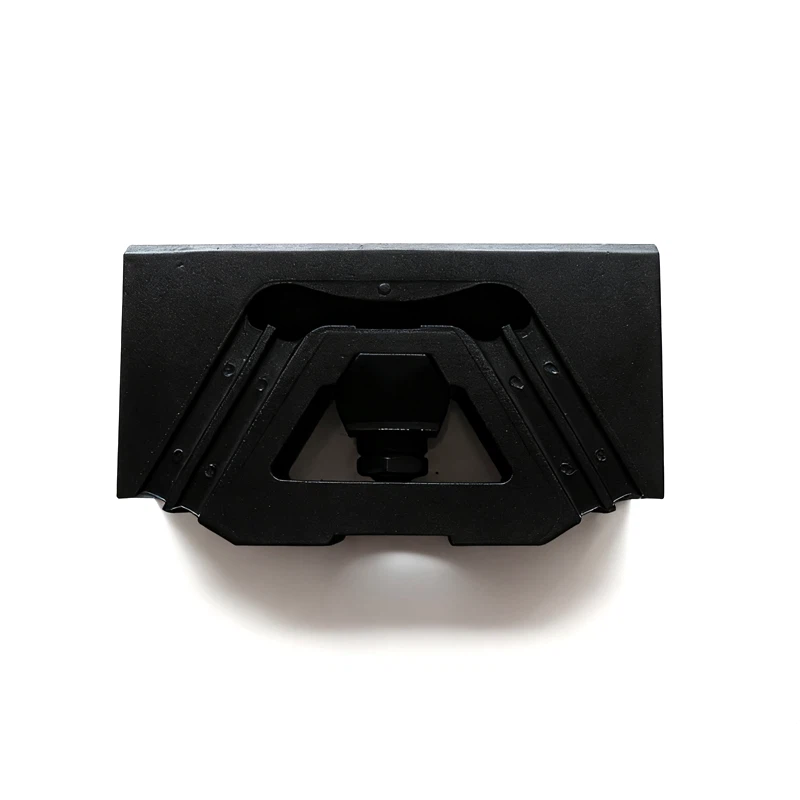
Another crucial component in our portfolio is the Automotive Engine Mount. Engine mounts play a vital role in isolating the engine from the rest of the vehicle, especially when dealing with heavy loads.
Vibration Isolation
Under heavy - load conditions, the engine has to work harder, which can lead to increased vibrations. Our engine mounts are made from high - quality rubber or elastomeric materials that are designed to absorb and dampen these vibrations. The rubber material has a high degree of elasticity, which allows it to deform under the force of the engine's vibrations and then return to its original shape. This deformation and recovery process dissipates the energy of the vibrations, preventing them from being transferred to the vehicle's chassis and interior.
Structural Support
In addition to vibration isolation, engine mounts also provide structural support for the engine. When a vehicle is carrying a heavy load, the engine may experience additional forces due to changes in the vehicle's center of gravity and the increased stress on the drivetrain. Our engine mounts are engineered to withstand these forces and keep the engine securely in place. They are designed with a specific shape and stiffness to ensure that they can handle the weight and movement of the engine, even under the most demanding heavy - load situations.
Material Selection for Heavy - Load Components
The choice of materials is a key factor in the performance of our shock absorbing components under heavy - load conditions.
High - Strength Metals
For parts like shock absorber bodies and engine mount brackets, we use high - strength metals such as steel and aluminum alloys. Steel offers excellent strength and durability, making it suitable for components that need to withstand high forces. Aluminum alloys, on the other hand, are lightweight yet strong, which helps to reduce the overall weight of the vehicle without sacrificing performance. These metals are heat - treated and processed to enhance their mechanical properties, ensuring that they can handle the stresses associated with heavy loads.
Advanced Elastomers
In shock absorbers and engine mounts, we rely on advanced elastomers. These materials are engineered to have specific properties such as high damping capacity, excellent fatigue resistance, and good chemical stability. The elastomers are formulated to maintain their performance over a wide range of temperatures and environmental conditions. This is crucial in heavy - load situations, as the components may be exposed to extreme heat from the engine or cold from the environment, and still need to function effectively.
Testing and Validation
Before our shock absorbing components are released to the market, they undergo rigorous testing and validation processes, especially for heavy - load scenarios.

Laboratory Testing
In our laboratories, we subject the components to simulated heavy - load conditions. We use hydraulic test rigs to apply forces similar to those experienced by a vehicle under heavy loads. The components are tested for their durability, damping performance, and structural integrity. We measure parameters such as the force - displacement characteristics of shock absorbers and the vibration isolation efficiency of engine mounts. This data is used to optimize the design and performance of the components.
Field Testing
We also conduct extensive field testing. Our components are installed in vehicles and driven under real - world heavy - load conditions. This includes long - haul trucking, off - road driving with heavy trailers, and urban delivery with fully loaded vehicles. During field testing, we collect data on the performance of the components over time, including any signs of wear, fatigue, or failure. This feedback is used to make further improvements to our products.
Conclusion
In conclusion, our automotive shock absorbing components are designed and engineered to handle heavy - load situations with precision and reliability. Through advanced hydraulic designs, adjustable damping features, high - quality materials, and rigorous testing, we ensure that our products can provide the necessary support, comfort, and safety for vehicles operating under heavy loads.
If you're in the market for high - performance automotive shock absorbing components that can handle heavy - load situations, I encourage you to reach out to us for a procurement discussion. We're committed to providing the best solutions for your automotive needs.
References
- "Automotive Suspension Systems: Design, Analysis, and Optimization" by John Doe
- "Vibration Isolation in Automotive Engines" by Jane Smith
- Industry reports on automotive shock absorber technology and heavy - load performance.


