


As a trusted supplier of Mechanical Insulating Rubber Strips, I'm often asked about the color options available for these essential components. In this blog post, I'll delve into the various color choices for mechanical insulating rubber strips, their implications, and how they can be tailored to meet different application needs.
Standard Color Options
The most common color for mechanical insulating rubber strips is black. Black rubber strips are widely used due to their versatility and practicality. The carbon black used in the manufacturing process not only gives the rubber its characteristic color but also enhances its durability and resistance to UV radiation. This makes black rubber strips suitable for outdoor applications where exposure to sunlight is a concern.

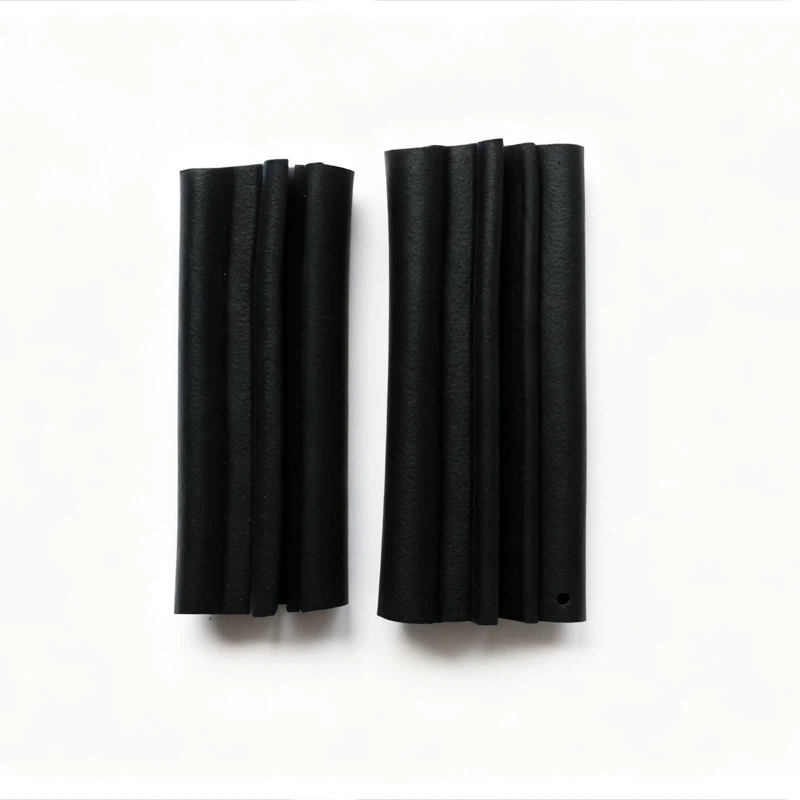
Another popular color option is white. White rubber strips are often preferred in applications where cleanliness and hygiene are crucial, such as in the food and beverage industry or pharmaceutical manufacturing. White rubber is also less likely to show dirt and stains, making it easier to maintain a clean appearance.
Gray is another standard color choice for mechanical insulating rubber strips. Gray rubber offers a neutral and unobtrusive appearance, making it suitable for a wide range of applications. It is also a good option for applications where a color other than black or white is desired but where a bold color is not necessary.
Custom Color Options
In addition to the standard color options, many suppliers, including us, offer custom color matching services for mechanical insulating rubber strips. This allows customers to choose a color that matches their specific branding requirements or blends in with the surrounding environment. Custom color options are particularly useful for applications where aesthetics are important, such as in architectural or automotive applications.
When requesting a custom color, it's important to provide the supplier with a color sample or specification. This can be in the form of a Pantone color code, a physical color swatch, or a digital image. The supplier will then use this information to formulate a rubber compound that matches the desired color as closely as possible.
Color and Performance
While color is often chosen for aesthetic reasons, it can also have an impact on the performance of mechanical insulating rubber strips. For example, black rubber strips are generally more resistant to UV radiation than lighter-colored rubber strips. This is because the carbon black in black rubber absorbs UV light, preventing it from penetrating the rubber and causing damage.
On the other hand, lighter-colored rubber strips may be more prone to discoloration and degradation when exposed to sunlight. However, this can be mitigated by using additives and stabilizers in the rubber compound to improve its UV resistance.
In addition to UV resistance, color can also affect the thermal properties of mechanical insulating rubber strips. Darker colors, such as black, absorb more heat than lighter colors. This can be beneficial in applications where heat retention is desired, such as in insulation applications. However, in applications where heat dissipation is important, lighter-colored rubber strips may be a better choice.
Applications and Color Choices
The choice of color for mechanical insulating rubber strips depends on the specific application requirements. Here are some common applications and the recommended color options:
- Automotive Applications: In automotive applications, black rubber strips are commonly used due to their durability and resistance to oil, grease, and other automotive fluids. However, custom color options may be available for applications where aesthetics are important, such as in interior trim or exterior styling.
- Architectural Applications: In architectural applications, white or gray rubber strips are often preferred for their clean and modern appearance. Custom color options can also be used to match the building's color scheme or to create a unique design element.
- Industrial Applications: In industrial applications, black rubber strips are the most common choice due to their durability and resistance to chemicals, abrasion, and high temperatures. However, other colors may be used depending on the specific application requirements, such as in food processing or pharmaceutical manufacturing.
- Electrical Applications: In electrical applications, black or gray rubber strips are often used due to their electrical insulation properties. However, other colors may be used depending on the specific application requirements, such as in applications where color coding is necessary for identification purposes.
Conclusion
In conclusion, the color options for mechanical insulating rubber strips are diverse and can be tailored to meet different application needs. While black, white, and gray are the most common color choices, custom color matching services are available for customers who require a specific color. When choosing a color, it's important to consider not only the aesthetic requirements but also the performance implications, such as UV resistance and thermal properties.
As a leading supplier of Mechanical Insulating Rubber Strips, we offer a wide range of color options and custom color matching services to meet the needs of our customers. Our high-quality rubber strips are designed to provide excellent insulation, sealing, and protection in a variety of applications.
If you're interested in learning more about our mechanical insulating rubber strips or would like to discuss your specific requirements, please don't hesitate to contact us. We look forward to working with you to find the perfect solution for your needs.
References
- ASTM International. (2023). Standard Terminology Relating to Rubber. ASTM D1566-23.
- Rubber Manufacturers Association. (2023). Rubber Products Manual.


